


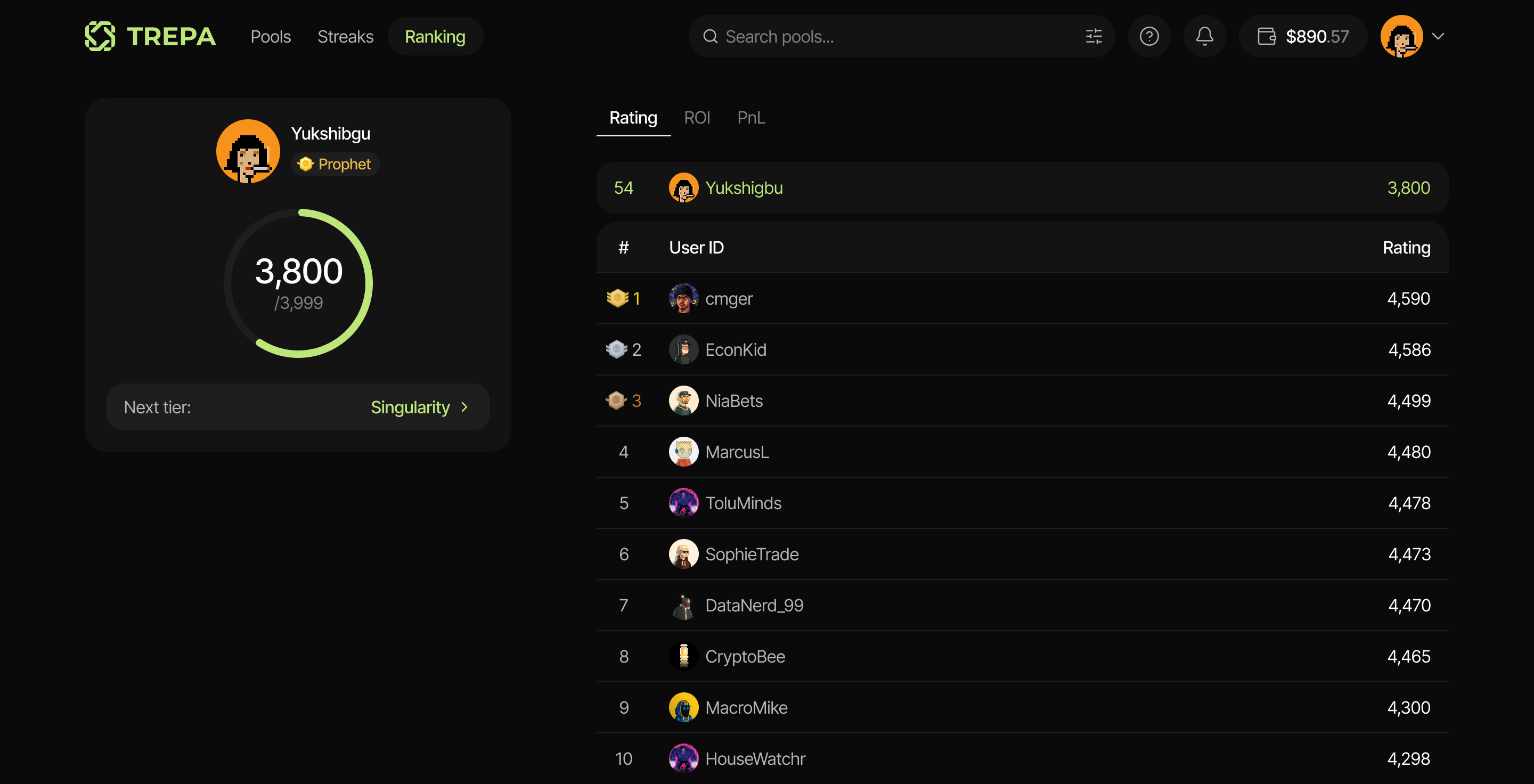
How Elo rating works
Every user begins with a base rating of 1500 that serves as their starting point. Trepa’s system treats each round as a series of head-to-head comparisons between all players.- If your prediction is closer to the actual outcome than another player’s, that counts as a win.
- If two predictions have the same accuracy, that’s a draw.
- If your prediction is less accurate, it’s a loss.
After launch, we’ll use empirical data from real user behavior and observed ratings-framework dynamics to fine-tune the system, then publish the updated parameters for community review.
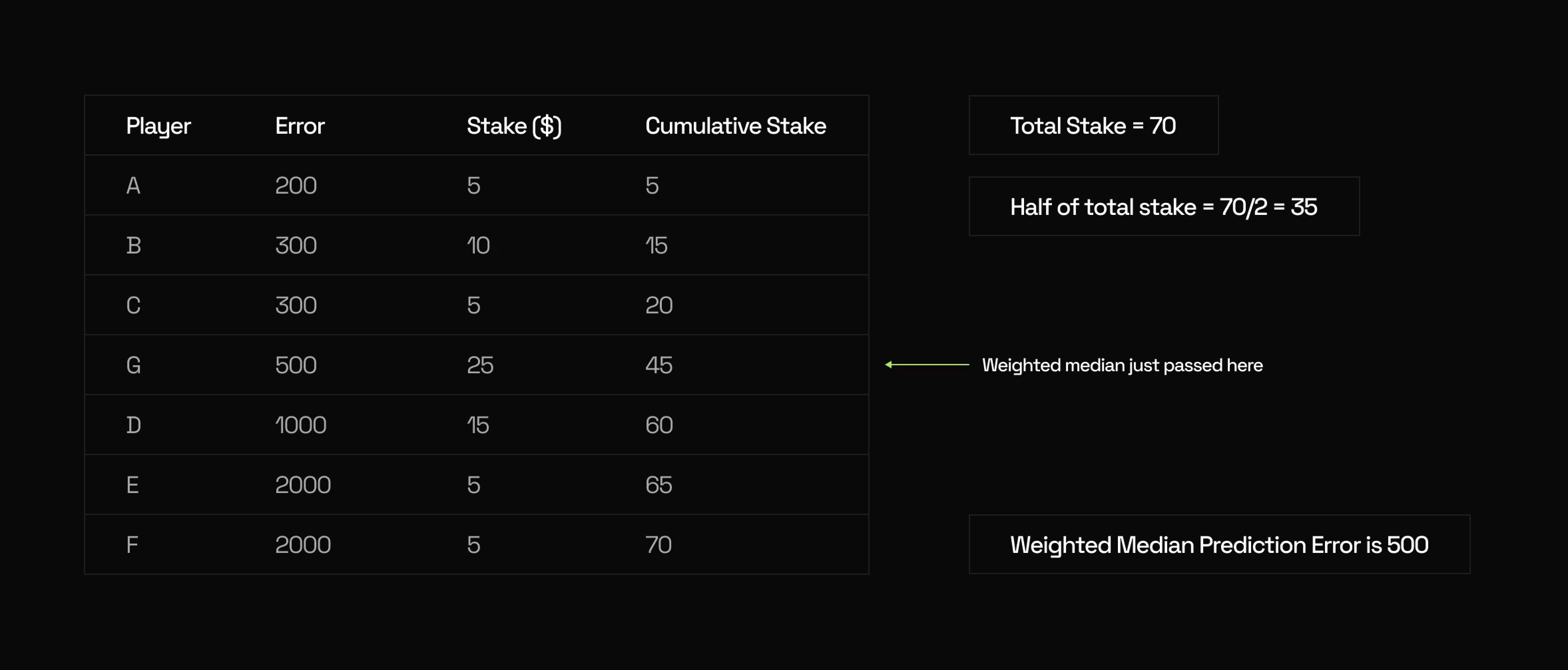
Why Elo rating matters
Elo rating separates consistent precision from one-time luck and reflects your long-term numerical prediction skills. A higher rating shows stronger predicting accuracy and better historical performance. Over time, Trepa will use the rating system to identify super predictors for special rewards and roles.Key principles
- Relative performance decides rating movement
Your rating only changes based on how you relatively perform against other players in the same pool, not on the absolute error alone. - Rating updates stay within capped limits
Each round has a defined adjustment range to prevent sudden or extreme jumps. - Inactive users slowly move toward the average
If you stop participating for a while, your rating gradually settles near the base rating, so active players stay fairly ranked. - Same rules apply to everyone, no boosts or manual edits
All players use the same update logic. Trepa doesn’t apply multipliers, bonuses, or manual corrections.